
The Ayurvedic response to all of this rests on a principle called Viruddha Chikitsa: treatment through contrary qualities. A body burdened by heat is answered with coolness. One depleted by dryness is restored through moisture. The classical texts thus recommend cold to soothe diseases caused by heat. This is not a passive philosophy. It is a daily practice, woven into the timing of meals, the choice of oils, the quality of breath, and the rhythm of rest.
Beginning the Day Before the Heat Does
The classical texts are attentive to timing. In Grishma, the early morning carries qualities the rest of the day simply will not offer again. The ideal is to rise before sunrise, when the air still holds a certain gentleness, and use that window deliberately.
The morning oil practice shifts in summer. Coconut oil, cold-pressed and lightly scented with sandalwood or vetiver, replaces the warming sesame of winter. Applied before bathing, it pacifies Pitta, forms a quiet barrier against the day’s thermal intensity, and transforms the shower that follows into something genuinely restorative. The cold bath itself is prescribed, not merely permitted. Water infused with rose petals or vetiver root carries additional cooling potency.
Fragrance, too, plays a therapeutic role. Sandalwood paste, rose water, the presence of jasmine. In classical Ayurveda, cooling aromatics act directly on the nervous system and the subtle channels, and their application in the morning is considered preparation rather than indulgence.
What the Summer Table Requires
If there is one area where modern intuition and Ayurvedic wisdom initially converge, it is the kitchen. We often sense, without being taught, that heavy winter foods feel wrong in the heat. What Ayurveda offers is a more precise map of why, and what the body needs.
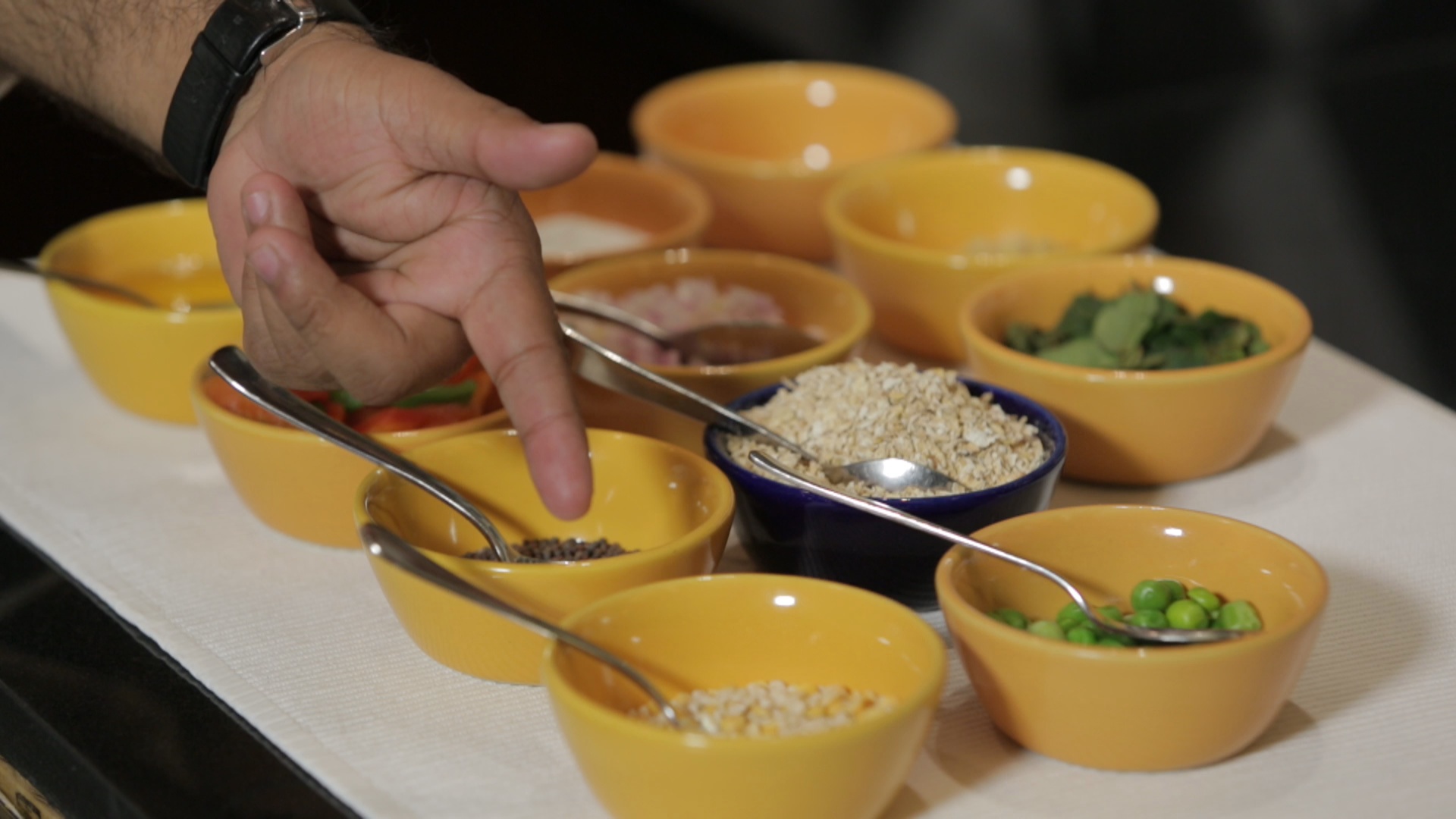
The summer season calls for foods that are sweet, cool, and light. Pungent, sour, or heating foods are best avoided or consumed in limited quantities. Basmati rice, wheat prepared as porridge, fresh seasonal fruits including melon, pomegranate, and coconut water, and generous use of cooling herbs such as coriander, fennel, and mint form the foundation of the summer table. Dairy occupies a prominent position in this season. Cool milk sweetened with raw sugar and cardamom is considered deeply nourishing. Lassi, which is yogurt diluted with cold water and blended with mint or rose, is the classical summer drink, due to its highly cooling nature.
Chilli, excess dry ginger, mustard seeds, and alcohol are set aside during these months. Their heating, drying qualities deepen the Pitta aggravation the season already produces.
The Wisdom of Doing Less
Ayurveda emphasises the importance of preserving energy in the summer months. Excess movement and exercise will only strain resources that are already depleted, causing stress on the body.
Exercise is recommended at half-capacity, before the sun reaches full strength, and completed by mid-morning. Gentle yoga, walking in the shade, and swimming are ideal. Daytime rest, which is discouraged in most other seasons, is explicitly permitted in Grishma. The body’s vitality is drastically reduced by sustained heat, and rest taken in the cool of midday is considered necessary for preservation.
The breath, too, is a summer tool. The pranayama techniques of Sheetali and Sheetkari (drawing cool air through a rolled tongue) lower body temperature and settle the nervous system. Practised for five to ten minutes in the morning, they prepare the body for the day from inside out.
Nourishing the Deeper Reserves
Summer’s most significant effect is on Ojas, the refined essence of all bodily tissues and the foundation of immunity and mental clarity. The season draws it outward. Rasayana herbs replenish it from within. Amalaki, considered cooling and deeply nourishing to the liver and blood, is perhaps the most important summer rasayana. Shatavari addresses the drying tendency of the season, restoring moisture and supporting hormonal steadiness. Brahmi attends to the mind that summer heat has agitated, bringing coolness to the nervous system and clarity to the mind.
The guiding question that classical Ayurveda leaves us with is simple. If the body is a fire, and this is a season that already burns brightly, what are you offering it? More heat, or its remedy?
At Ananda, the principles of Ritucharya are woven into every aspect of the seasonal programme: the food that is prepared, the therapies that are offered, and the rhythm of rest and renewal that the body, in summer, genuinely needs.