Having lived an active lifestyle, he was familiar with physical movement and endurance and now sought something different: a way to cultivate inner steadiness, gentleness, and clarity. For this reason, the Dhyana Meditation Intensive Programme was recommended, as his intention was not to increase physical capability, but to explore how awareness, breath, and stillness could influence his wellbeing at its roots.
Raja Yoga for the Heart and Mind
The therapeutic foundation of the Dhyana Meditation Programme lies in the classical Raja Yoga tradition, where healing unfolds through mastery of the mind rather than the body. This discipline of yoga, often called the “royal path,” focuses on mental refinement, leading from outer distraction to inner harmony. The programme follows the eightfold path of Yoga, with emphasis on Pratyahara (withdrawal of the senses), Dharana (focused concentration), and Dhyana (meditative absorption), each a step toward transcending habitual mental patterns.
The guest’s journey began with Pratyahara, the inward turning of the senses. This stage gently detached him from external stimuli, allowing the nervous system to recover from continuous sensory engagement. As attention began to shift inward, Dharana was introduced, cultivating one-pointed awareness, often through the steady observation of the breath. This process anchored his wandering thoughts and restored rhythm to both breath and mind.
Gradually, Dhyana, the meditative state of deep witnessing, emerged as a natural extension of practice. In this stillness, effort dissolved. The mind no longer sought to control the breath but to merge with it. Within this stillness, awareness expanded and a profound calmness settled over his being, allowing emotional and physiological release.
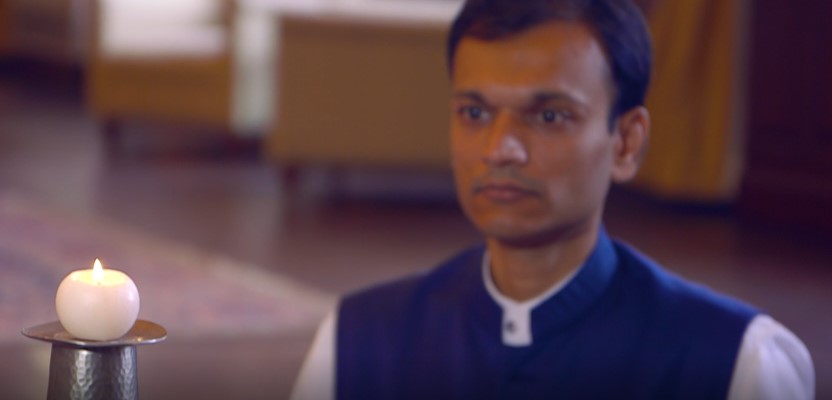
Breathwork and Gentle Body Awareness
The guest had developed compensatory breathing mechanisms due to his cardiac condition, which meant his body often overworked to maintain equilibrium. The Dhyana programme approached this through both yogic breathwork and subtle body awareness, using the breath as a bridge between physiological function and mental stillness.
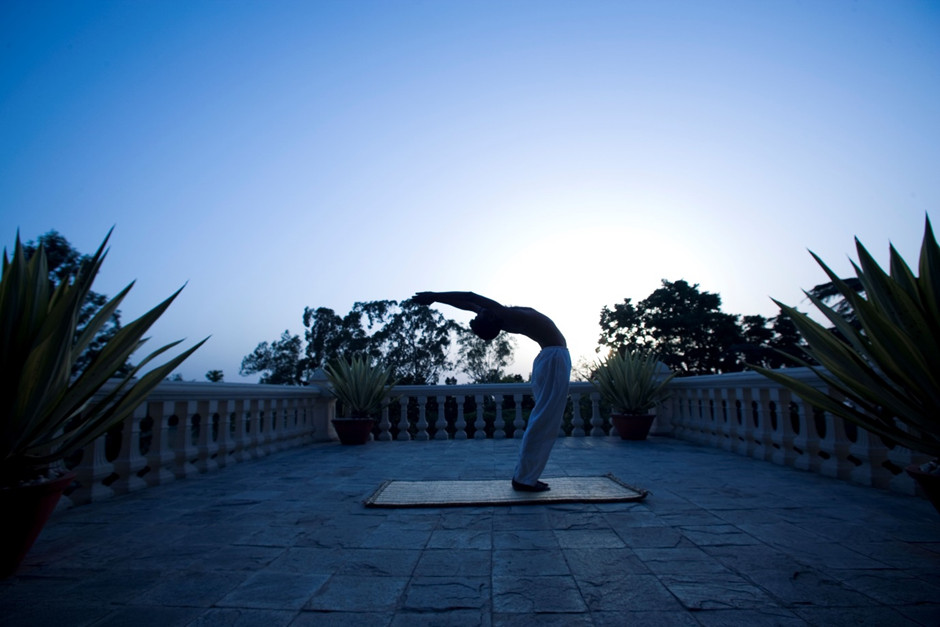
Techniques such as Full Yogic Breathing, Nadi Shodhana (alternate nostril breathing), and Brahmari (humming breath) were introduced progressively. These pranayama practices purify energy channels and regulate the nervous system, bringing the mind into a meditative rhythm. Gentle asanas like Marjariasana (cat-cow) and Sarpasana (snake pose) opened the chest, improving circulation and diaphragmatic expansion.
The daily rhythm alternated between meditative sitting, guided relaxation, and Yoga Nidra, where conscious awareness is maintained through deep rest. This layered approach helped balance prana (vital energy), reduce sensory overload, and prepare the mind for sustained states of meditation.
Progress and Transformation
For this guest, whose years of professional pressure had accumulated as emotional and cardiac strain, the structured journey of Raja Yoga offered not only relaxation but realignment. The disciplined framework, moving from sensory withdrawal to meditative absorption, addressed both the root of stress (chitta vritti) and the physiological manifestations of anxiety.
Through continued practice, his metrics reflected measurable transformation: body–mind awareness improved from 2 to 9, breathing capacity from 2 to 7, flexibility from 3 to 7, clarity from 5 to 9, and emotional steadiness from 4 to 8. Sleep deepened from 6 to 8, symbolizing the restoration of inner peace.
These numbers told only part of the story. What truly shifted was his relationship to his own consciousness. Breath became effortless. Stillness felt natural. The boundaries between mind and body softened
A New Relationship with Wellbeing
What changed was not only his physiology, but also his understanding of health itself. His cardiac history no longer felt like a vulnerability, but a reason to live more consciously and intentionally. By addressing his health through a potential-based approach rather than seeking to simply mitigate problems, the guest was able to shift from managing illness to cultivating wellness.
By addressing physiological, psychological, and energetic dimensions simultaneously, the programme leads to extreme improvements, beyond just cardiac health. It encompassed quality of life, self-understanding, and spiritual exploration—exemplifying how yoga therapy serves not merely as a supplementary treatment but as a lifestyle for complete wellness.
Read more about our Dhyana Meditation Programme here.